Viking VCBB Not Cooling? The Compressor Start Relay Is a Common Culprit
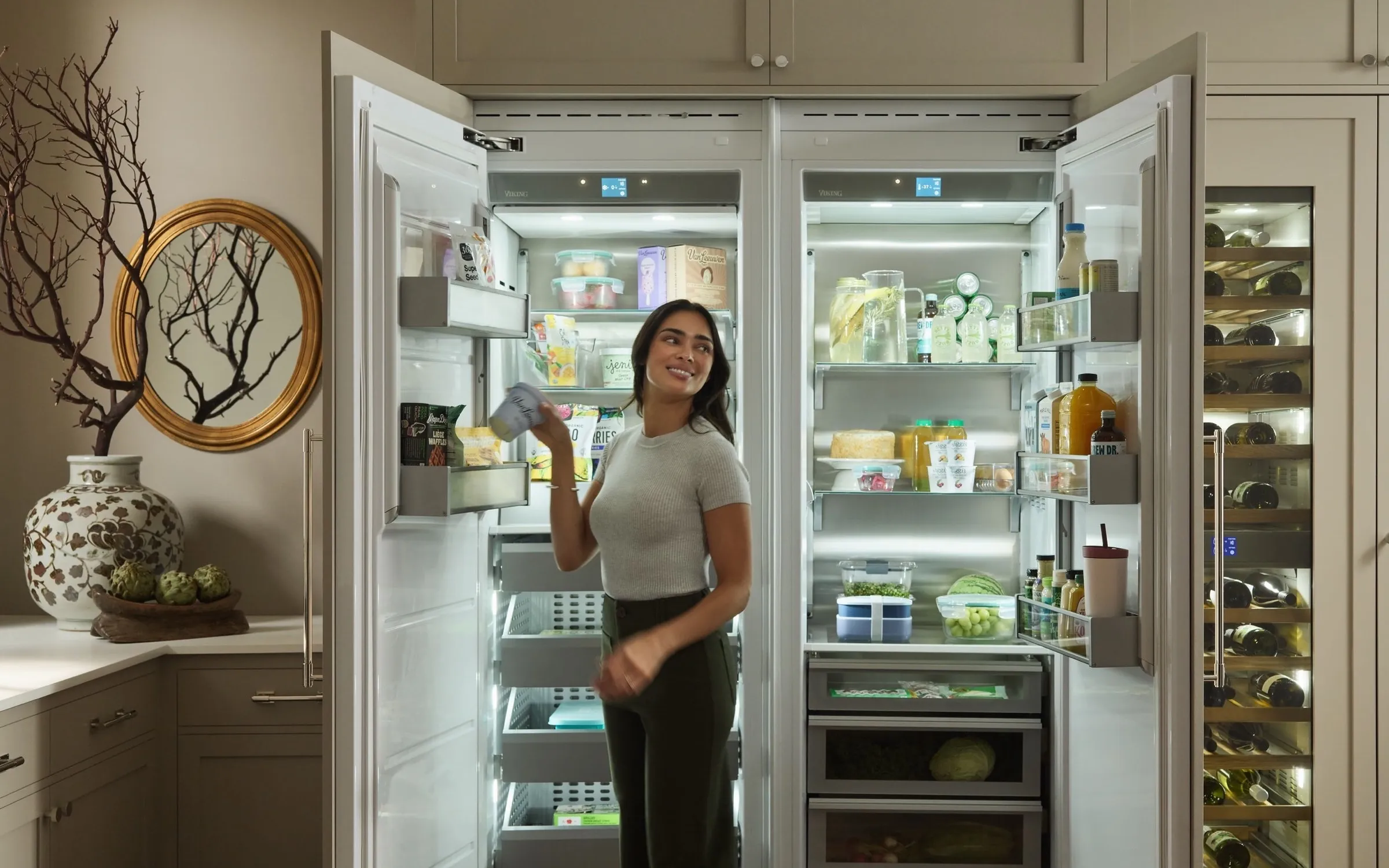
What I Found On This Viking Service Call
The call came in from a homeowner in Orange — one of the older neighborhoods near Chapman — with a Viking VCBB-series 36-inch built-in bottom-freezer. The customer said the unit had stopped cooling that morning. He could hear a clicking sound from the back every minute or two, and the interior was slowly warming up. The compressor itself wasn’t running steady — it was trying to start, clicking, and giving up.
When you walk up to a Viking VCBB and hear that pattern — periodic clicking from the compressor area, the compressor not actually running, cabinet warming up over hours — the first part to suspect is the compressor start relay. The relay is what tells the compressor to crank up to running speed when the control board calls for cooling. When the relay fails, the compressor receives power but can’t get to running speed, the overload protector trips, the compressor cools off for a few minutes, the relay clicks back in and tries again, and you get this clicking-and-resting cycle indefinitely.
How I Narrowed It Down
I pulled the lower rear access panel off the back of the cabinet. On the Viking VCBB the compressor sits at the bottom of the unit, with the start relay and the run capacitor mounted right next to it on the side of the compressor housing. The relay is a small black plastic component you can pop off the side of the compressor terminal cover.
First I watched the unit do its thing for a few minutes. The condenser fan was running normally. The control board was issuing the compressor-on signal — I could measure 120V at the compressor power terminal. But the compressor itself was only making a single click sound when the signal came in, then nothing. Five minutes later, click, nothing. Classic stalled-start pattern.
I powered down the unit, pulled the start relay off the compressor, and gave it a shake. I could hear a small rattle inside — that’s debris from a failed solid-state component bouncing around inside the relay housing. On the older PTC-style start relays this is a tell that the internal PTC element has cracked. I also tested the relay continuity — it was open across the contacts that should have closed under power. Confirmed failure.
I also checked the compressor itself before condemning it. I put my meter across the compressor windings — start winding to common, run winding to common, and start to run. All three readings were in spec for this compressor model. So the compressor itself was healthy. It just needed a working relay to start.
A couple of things I always check on a Viking VCBB before committing to a start relay swap. The run capacitor in the same housing — sometimes a weak run cap and a failing relay show up together. The compressor terminals — make sure none of them are corroded or loose. The wiring harness from the control board to the compressor compartment — these can chafe over years of vibration. All clean on this one.
A note on the Viking VCBB platform — these are built-in residential units that share some architecture with their commercial line, but the components in the compressor compartment are residential spec. The start relay is a common wear item across this series, and I keep them on the truck for that reason.
The Fix and What It Took
I had the right PTC start relay on the truck. The swap takes about 15 minutes. The relay pops off and on the side of the compressor with a couple of push-fit terminals — no soldering, no harness routing. The harder part of this kind of call is usually not the relay itself, it’s confirming that you’ve correctly identified the failure mode so you don’t spend hours chasing the wrong thing.
After the swap I powered the unit back up and waited for the compressor cycle. Within about thirty seconds the control board issued a compressor-on signal, the new relay clicked once, and the compressor came up to running speed with a steady hum. I could hear the refrigerant moving. I put my hand on the condenser coil and felt the warmth start to come up within a couple of minutes. Within twenty minutes the fridge was already a few degrees cooler than when I arrived. By the time I packed up the truck, cabinet temperature was approaching normal.
Customer paid the flat repair quote, the diagnostic fee was waived because he went ahead with the work, and the job is covered by our 3-month warranty.
A note if you’re trying to diagnose this yourself. If you hear a periodic clicking from the back of your Viking and the unit is warming up over a few hours, do not keep cycling power to it. Every restart attempt with a failed relay stresses the compressor. Pull the breaker, save the food in coolers, and get a tech out same- or next-day.
If you’re in Orange or anywhere in Orange County and your Viking refrigerator is clicking but not cooling, give us a call. We’re an independent shop with specialists who work on Viking built-ins regularly. Same- or next-day service in most of OC. $65 diagnostic, waived with repair.