Sub-Zero Running Warm? A Failing Condenser Fan Motor Is a Common Culprit
What I Found On This Sub-Zero Service Call
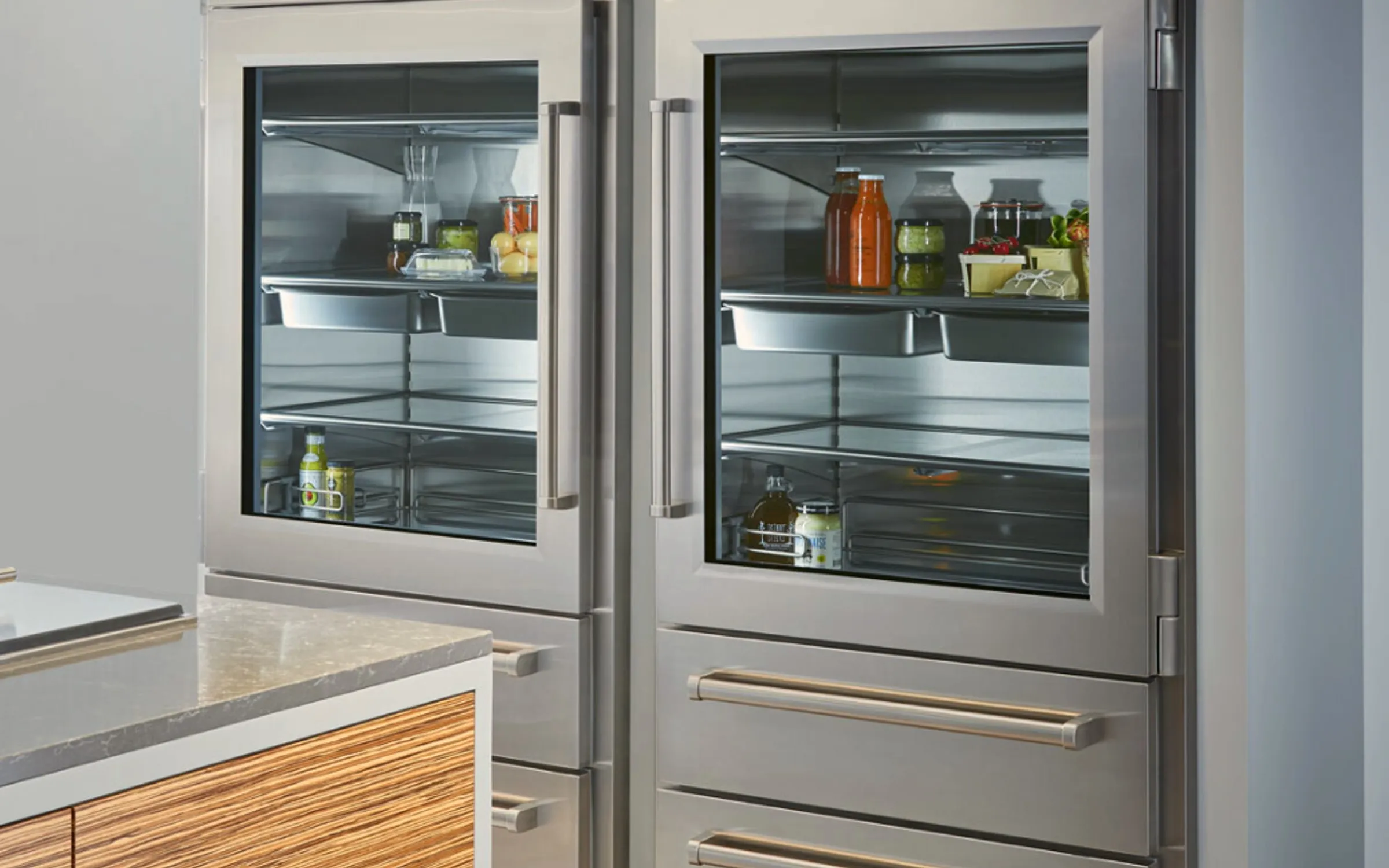
The call came in from a homeowner in Huntington Beach with a Sub-Zero 600 series built-in — the side-by-side configuration with the freezer on the left and the fresh-food side on the right. He said the unit had been getting steadily warmer over a couple of weeks. Initially it was a degree or two off setpoint. By the time he called, the fridge was reading 50°F and the freezer was at 15°F. He could also hear the compressor running constantly — which on a Sub-Zero is unusual because they normally cycle off pretty regularly.
When a Sub-Zero is warm and the compressor is running nonstop, the first thing I check on these is the condenser fan. The Sub-Zero design relies heavily on that fan to pull air through the condenser coil at the top of the cabinet (on most 600 series units) and dump heat out the front grille. When the fan slows down or stops, the condenser can’t dump heat efficiently, the high-side pressure climbs, the compressor has to work harder for less cooling effect, and the whole cabinet drifts warm.
How I Narrowed It Down
I pulled the top grille off the unit and immediately saw the issue. The condenser coil was dusty — not catastrophically so, the customer had a service tech vacuum it a couple of years ago — but the fan blade was wobbling visibly when it spun, and when I touched the fan housing I could feel a vibration that shouldn’t be there. The bearings in the condenser fan motor were on their way out.
I powered down the unit, pulled the fan motor, and confirmed it on the bench. The shaft had play in it that you could feel by wiggling the blade. Spinning it by hand felt notchy instead of smooth. On a Sub-Zero condenser fan motor, this is the classic late-stage failure — bearings get worn from years of duty cycle and start losing efficiency. The motor still spins, but slower than spec, and it makes less airflow than the system needs to reject heat properly. Eventually it seizes entirely.
A note on Sub-Zero design — these built-ins are very different from a typical free-standing fridge. The compressor and condenser sit at the top of the cabinet (or sometimes the bottom on specific models), and the airflow path through the condenser is engineered to a specific volume. When the fan slows down, you can also start seeing secondary symptoms — the compressor compartment runs hotter, the front grille feels hotter than usual to the touch, and if it goes on long enough you can damage the compressor itself from prolonged overheating.
I also vacuumed the condenser coil while I had everything apart. Even a thin film of dust adds insulation to the coil fins and reduces heat rejection efficiency. On a Sub-Zero this matters more than it does on most domestic fridges because the system is sized tighter — there’s less margin for reduced heat rejection before performance drops off.
A couple of things I confirm before committing to a fan motor swap on a Sub-Zero. Door gaskets, because Sub-Zero magnetic gaskets are particularly tight and when they age out they hurt the box more than on a typical fridge. The door switches, because if a switch is stuck the interior light stays on and dumps heat into the cabinet. Both checked out on this one.
The Fix and What It Took
I had a compatible Sub-Zero condenser fan motor on the truck. These are not interchangeable across model generations, so it matters to bring the right one. The swap takes about 45 minutes. The motor sits in a bracket at the top of the cabinet, two screws hold the bracket, and the harness pulls off cleanly. New motor in, new blade balanced on the shaft, powered up.
Fan came on smooth and quiet. I could feel a strong flow of air coming out the front grille within seconds. Compressor compartment temperature started dropping back toward normal. Within about an hour the fridge had dropped from 50°F into the low 40s, and by the time I left it was at 38°F and cycling normally for the first time in weeks.
Customer paid the flat repair quote, the diagnostic fee was waived because he went ahead with the work, and the job is covered by our 3-month parts and labor warranty.
A note on these. Sub-Zero built-ins are built to last 20+ years with maintenance, and the parts ecosystem is robust. A condenser fan motor swap is one of the cleaner repairs on this platform, and it gets you back to original performance for a fraction of what a replacement built-in costs.
If you’re in Huntington Beach or anywhere in Orange County and your Sub-Zero refrigerator is running warm and the compressor is on nonstop, give us a call. We’re an independent shop and our specialists work on Sub-Zero built-ins regularly. Same- or next-day service throughout OC. $65 diagnostic, waived with repair.