Everest Reach-In Running Warm? The Defrost Timer Is a Common Culprit
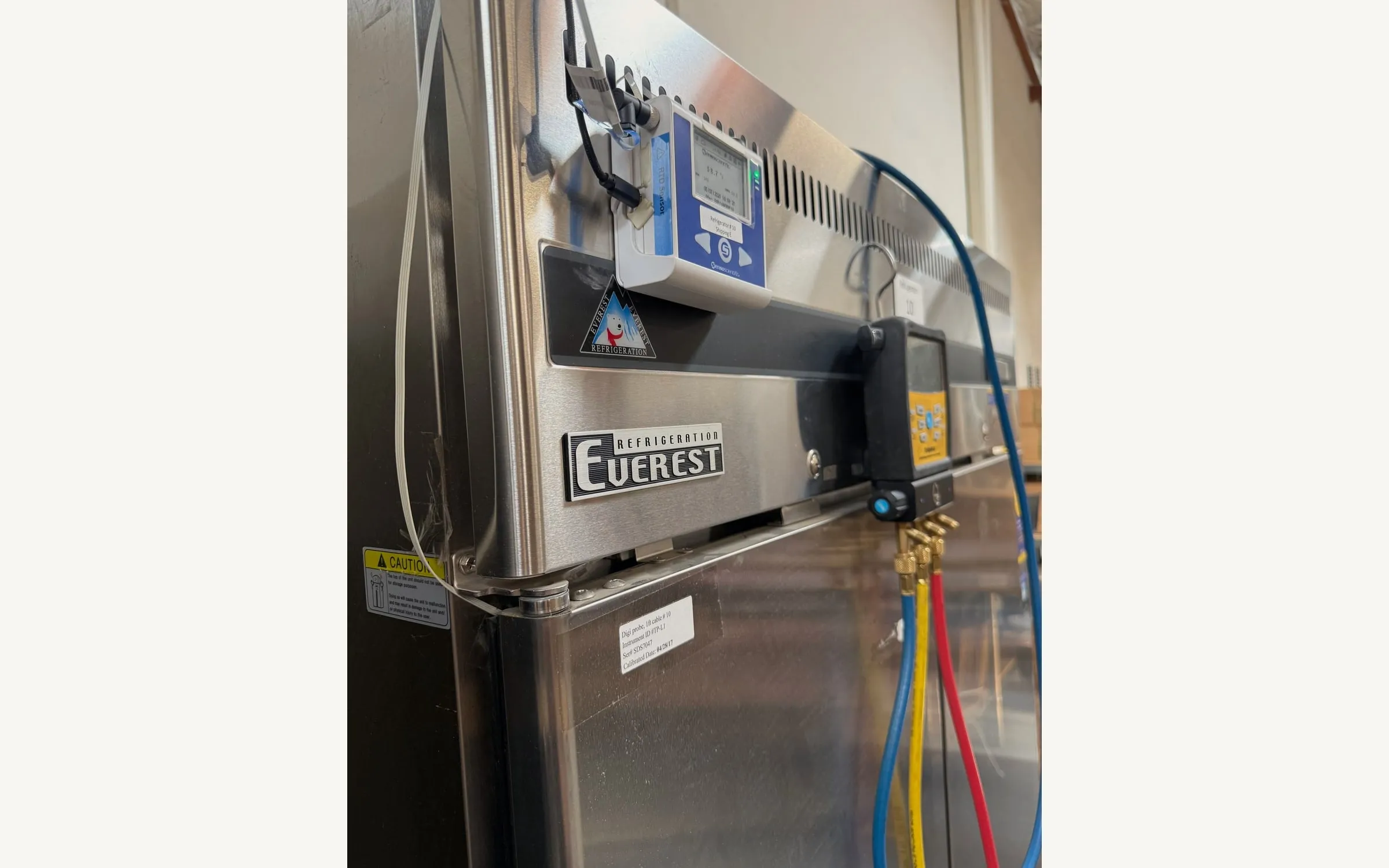
What I Found On This Everest Service Call
I got out to a busy lunch spot in Santa Ana early one Tuesday morning, before the kitchen had fired up for the day. The chef-owner had an Everest two-door reach-in in his prep line that had crept up to 48 degrees overnight. He’d already moved his most sensitive product into the walk-in next door, but he was looking at a hard reset of his whole prep schedule if he couldn’t get the reach-in back to spec by lunch service.
When you walk up to an Everest reach-in that’s running warm, the first thing you check is whether the compressor is running or not. This compressor was running, which immediately tells you it’s not a relay or start-component problem. The case was cold to the touch from the airflow, but the inside cabinet wasn’t pulling down to 38. That points you toward defrost. If the evaporator coil ices up and the defrost cycle isn’t clearing it, the airflow chokes off and the cabinet stops cooling effectively even though the refrigeration system is working hard.
I pulled the interior shelving and the evaporator panel. Coil was a brick of ice. Confirmed.
How I Narrowed It Down
On the Everest reach-in compressor relay / defrost timer setup, you’ve got three things that can fail and produce an iced-up evaporator: the defrost heater itself, the defrost termination thermostat, and the defrost timer. I worked through them in order.
I pulled the defrost timer first because it’s the most common offender on these reach-ins and it’s the easiest part to test. The timer on this Everest model sits inside the compressor compartment behind a small access panel. I disconnected the cabinet and put a meter on the timer terminals. The motor side showed open — meaning the timer wasn’t advancing. That’s a classic failed-timer reading. Just to be thorough I also pulled the defrost heater and the termination thermostat and tested both. Heater was reading normal resistance, termination thermostat was closing at the right temperature. So the rest of the defrost circuit was healthy. The timer was the actual fault.
I should also mention — on commercial reach-ins like this, the condenser coil cleanliness matters a lot. A dirty condenser can mask defrost problems and accelerate them. I checked the condenser at the bottom of the unit and it had a heavy lint mat — typical for a restaurant prep line where the airflow pulls in everything off the floor. I cleaned it as part of the same call.
The Fix and What It Took
I had a compatible defrost timer on the truck — Everest uses a fairly common Paragon-style mechanical timer on this generation. Swap took about thirty minutes. Then I had to manually defrost the evaporator coil — turned the timer cam to defrost, let the heater run for about twenty minutes, then blew the rest of the loose frost off with the shop air. Cleaned the condenser at the same time. Reseated everything and powered the unit back up.
Cabinet started pulling down within thirty minutes. By the time I left, the box was at 41 and dropping steadily toward 38. The chef was prepping for lunch service with about thirty minutes to spare. Saved his day.
Total time on site was a little under two hours. The restaurant paid the flat parts-and-labor price. Diagnostic fee was waived because they moved forward with the repair. Parts and labor are backed by our 3-month warranty.
A note for restaurant operators. If your Everest reach-in has iced up and stopped cooling, the defrost timer is the most likely culprit by far. Downtime on a reach-in during prep service is brutal — lost product, lost prep time, scrambling staff — so this is one of those calls where same-day matters a lot.
If you’re running a restaurant, deli, or catering kitchen in Santa Ana, Anaheim, or anywhere in Orange County and your Everest cooler has stopped cooling, give us a call. We’re an independent commercial-refrigeration shop with experienced technicians on Everest reach-ins, and we can usually get out the same or next day during business hours. $65 diagnostic, waived with repair.